The Rise of Basically Yes: Why Handwritten Fonts Are Reshaping Modern Design
In a digital landscape saturated with sleek sans-serifs and rigid geometric typefaces, a quiet but powerful shift is underway. Professionals, creators, and entrepreneurs are increasingly turning to fonts that feel less like machine output and more like human expression. At the center of this movement is Basically Yes, a fun, handwritten font that perfectly captures the growing demand for warmth, authenticity, and personality in visual communication. But this isn't simply a story about a single typeface. It's a reflection of larger changes in how brands connect with audiences, how content creators tell stories, and how professionals across industries are rethinking the role of typography in their work.
What Is Basically Yes? A Font That Captures Authentic Expression
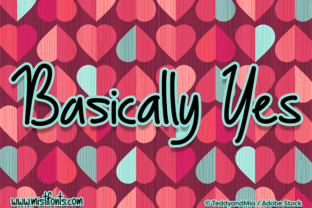
Basically Yes is a handwritten font that brings a playful, organic energy to any design project. Unlike many script or handwritten fonts that feel overly polished or mechanically uniform, Basically Yes retains the natural variations and character of real handwriting. Each letterform carries a certain spontaneity—a slight tilt, a varying stroke weight, a sense of movement that feels genuinely human. This makes it a versatile tool for everything from social media graphics and product packaging to branding materials, invitations, and website headers.
What sets Basically Yes apart from the thousands of available handwritten fonts is its balance between legibility and personality. It is readable enough for body text in small doses, yet distinctive enough to serve as a hero element in a layout. For professionals who need to communicate warmth without sacrificing clarity, Basically Yes offers a middle ground that is increasingly hard to find in the world of digital typography.
The Broader Shift Toward Imperfect, Human-Centered Design
The rising popularity of fonts like Basically Yes is not an isolated phenomenon. It is part of a larger cultural and commercial movement away from perfection and toward authenticity. Over the past decade, consumers have grown skeptical of overly polished, corporate messaging. They crave brands that feel real, relatable, and approachable. This shift has driven changes in everything from photography (candid vs. staged) to copywriting (conversational vs. formal) and, of course, typography.
Handwritten fonts, and specifically Basically Yes, tap into this desire for human connection. When a brand uses a handwritten typeface, it signals that there is a person behind the message—someone with a voice, a personality, and a sense of humor. This is particularly important in an era where automation and AI-generated content are becoming more prevalent. The very imperfection of handwriting becomes a mark of authenticity, a way to differentiate from the growing tide of generic, templated content.
For marketers, freelancers, and entrepreneurs, this means that choosing a font like Basically Yes is more than a design preference—it is a strategic decision. It communicates that your brand values connection over polish, and that you are willing to be vulnerable and human in a space that often rewards sterility.
Why Basically Yes Is Gaining Attention in Creative and Business Circles
Several converging trends explain why Basically Yes is capturing the attention of designers, brand strategists, and content creators. First, the rise of micro-brands and solopreneurs has created a demand for design tools that are both accessible and distinctive. Small business owners and freelancers cannot afford to hire a custom type designer, but they still need to stand out. A font like Basically Yes offers a unique, handcrafted aesthetic without the cost or lead time of bespoke typography.
Second, the explosion of visual-first platforms like Instagram, Pinterest, and TikTok has elevated the role of typography in content. A single post with a compelling headline set in a handwritten font can stop a scroll and invite engagement. Basically Yes, with its playful and approachable character, is particularly effective in these contexts. It works well for quotes, announcements, product highlights, and promotional graphics—exactly the kind of content that drives modern marketing.
Third, there is a growing recognition that handwritten fonts can improve emotional resonance in digital communication. Research in consumer psychology consistently shows that people respond more positively to content that feels personal. A handwritten font like Basically Yes can make an email newsletter feel like a note from a friend, a landing page feel more welcoming, or a product label feel more artisanal. This emotional layer is something that standard fonts simply cannot replicate.
Practical Applications of Basically Yes Across Industries
To understand the true versatility of Basically Yes, it helps to look at how it is being used in practice. In the retail and e-commerce space, product packaging is one of the most powerful applications. A small-batch candle company, for example, might use Basically Yes for the brand name on its labels, instantly conveying a handmade, artisanal quality. A boutique clothing brand could use it for hang tags or shopping bags, reinforcing a friendly, approachable image.
In the world of content creation, Basically Yes shines in social media graphics, video thumbnails, and blog headers. A lifestyle influencer might use it for a series of Instagram story templates, creating a cohesive and recognizable visual identity. A freelance writer could use it for the title of a digital product or a lead magnet, making the offer feel more personal and less corporate.
For event professionals—wedding planners, party coordinators, and corporate event designers—Basically Yes offers a perfect match for invitations, signage, and programs. Its handwritten character feels celebratory and intimate, which is precisely the tone that many events aim for. Even in more formal contexts, such as internal company communications or employee recognition materials, a font like Basically Yes can humanize the message and make it feel more genuine.
How Basically Yes Aligns With Modern Branding and Marketing Strategies
Branding in the 2020s is less about strict consistency and more about emotional connection. The old model of a single, rigid logo and a locked-down type palette is giving way to more flexible, expressive brand systems. Basically Yes fits naturally into this new paradigm. It can serve as a secondary or accent font that injects warmth into an otherwise clean and modern brand identity. It works beautifully in combination with sans-serif fonts, creating contrast and hierarchy without clashing.
Marketers who are attuned to current trends also recognize that handwritten fonts signal approachability and trustworthiness. In industries where trust is paramount—health and wellness, education, financial coaching, personal development—a font like Basically Yes can soften the brand's appearance and make it more inviting. It says, "We are here to help, not to impress you with our corporate polish."
Furthermore, the rise of user-generated content (UGC) and community-driven marketing has created a need for fonts that feel authentic and shareable. When a brand encourages customers to create content using its products, having a distinctive handwritten font can help that content feel cohesive even when it comes from many different creators. Basically Yes provides that thread of visual consistency without feeling forced or uniform.
The Technology and Craft Behind Basically Yes
While the aesthetic of Basically Yes is playful and spontaneous, the craftsmanship behind it is anything but accidental. Creating a handwritten font that is both usable and appealing requires meticulous attention to detail. Every letter, number, and punctuation mark must be carefully drawn and digitized, preserving the natural variations that make handwriting feel real while ensuring that the font functions well across different sizes, screen resolutions, and print formats.
Modern font technology allows for features like OpenType alternates, ligatures, and swashes—elements that can make a handwritten font even more dynamic. Basically Yes includes these features, giving designers the ability to create text that looks even more organic and less repetitive. This technical sophistication is one reason why the font resonates with professionals who need reliability as well as beauty.
It is also worth noting that Basically Yes is designed to work across platforms. Whether you are using it in Adobe Creative Suite, Canva, Figma, or even Microsoft Office, the font renders consistently and maintains its character. This cross-platform reliability is essential for freelancers and small teams who do not have dedicated IT support or specialized software.
Integrating Basically Yes Into Your Creative Workflow
For professionals looking to incorporate Basically Yes into their projects, the key is to use it intentionally rather than indiscriminately. Because handwritten fonts carry strong emotional and stylistic weight, they work best when used as accent elements rather than primary body text for long reading. A common best practice is to use Basically Yes for headlines, subheadings, call-to-action buttons, and short phrases, while pairing it with a clean, readable sans-serif or serif font for longer passages.
In digital design, consider using Basically Yes for hero text on landing pages, especially if your brand voice is casual, friendly, or creative. It also excels in quote cards, testimonial graphics, and social media templates. In print, it works beautifully for postcards, flyers, and small-format signage. For presentations, using Basically Yes for slide titles can instantly make your deck feel more engaging and less corporate.
Color choice also matters when using a handwritten font. Because Basically Yes has a warm, organic feel, it pairs best with similarly warm colors—earth tones, pastels, soft neutrals, and muted accents. High-contrast combinations, such as white text on a dark background, can work, but they tend to emphasize the font's playful side. For a more refined look, consider using darker shades of the same color family to create depth without harshness.
The Future of Handwritten Typography in a Digital-First World
As technology continues to evolve, the role of handmade and human-like design elements will only grow. In a world of AI-generated text, generic stock photography, and templated layouts, the desire for genuine human expression becomes more acute. Fonts like Basically Yes represent a counterbalance to the cold efficiency of digital tools. They remind us that communication is ultimately about people connecting with people, and that even the smallest design choice can influence how a message is received.
For professionals who want to stay ahead of the curve, embracing handwritten typography is not about following a trend—it is about understanding the deeper need for authenticity that defines our current era. Whether you are a marketer developing a campaign, a freelancer building a brand, or an entrepreneur launching a product, the fonts you choose say something about your values. Choosing Basically Yes says that you value warmth, personality, and genuine connection. And in a crowded digital landscape, that message is more powerful than ever.
The demand for accessible, expressive design tools will continue to rise as more people enter the creative economy. Handwritten fonts, with their ability to convey individuality and emotion, are uniquely positioned to meet this need. Basically Yes is not just a font—it is a reflection of where design is headed: toward more humanity, more imperfection, and more yes.